Historic Hunter’s Pool
A Landscape Shaped by Water, Work and Time
Hunter’s Pool, set within the grounds cared for by Windmill Angling Club at Mottram St Andrew, is far more than a fishing water. It is a historic landscape feature whose origins lie in the early nineteenth century and which reflects both the industrial and rural heritage of the area.
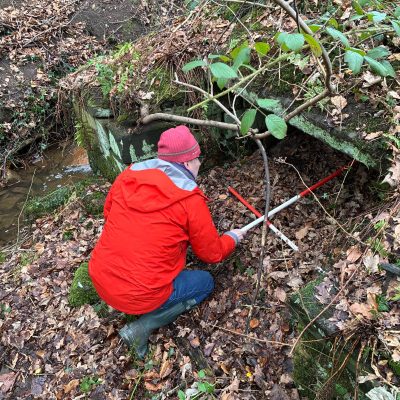
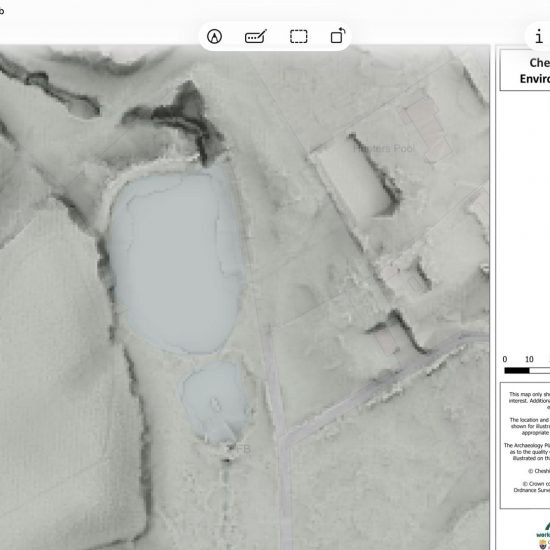
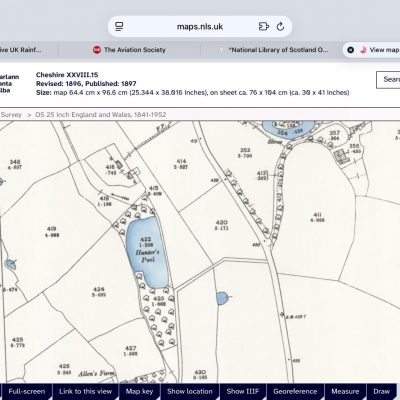
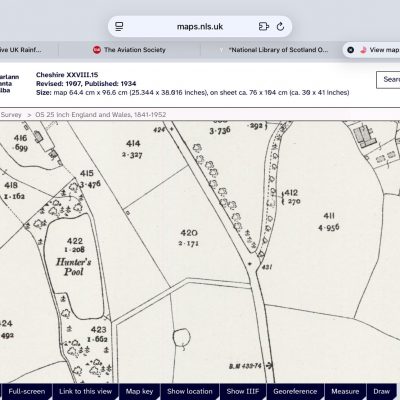
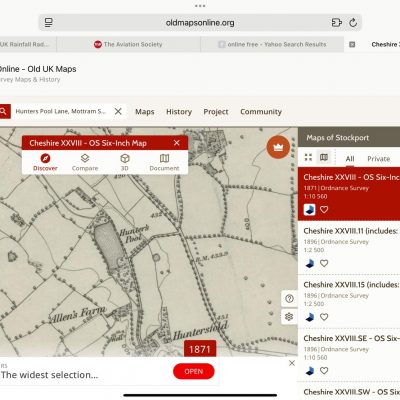
A recent archaeological inspection and research undertaken as part of the Cheshire Historic Environment Record confirms that Hunter’s Pool is an artificial pond, created by damming the Mottram St Andrew’s Brook. Historic maps show the pool was already in existence by the early 1800s and physical evidence within the dam strongly supports this early date.
The Dam and Water Management Features
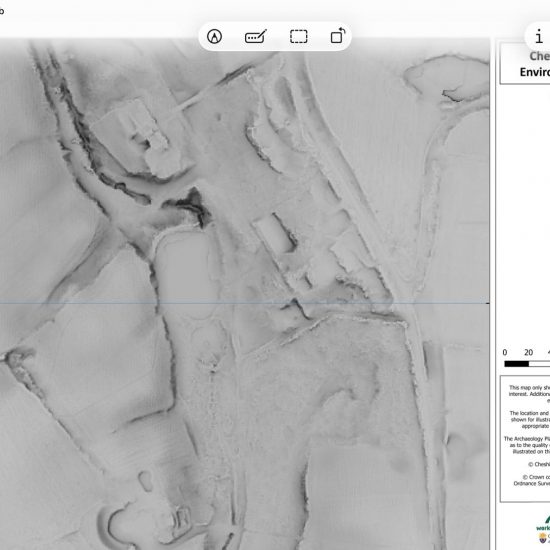
The pool is retained by a substantial, curving earth dam approximately 70 metres long and up to 4 metres high. The inner face of the dam is partly lined with brickwork, indicating a carefully engineered structure rather than a simple earth bank.
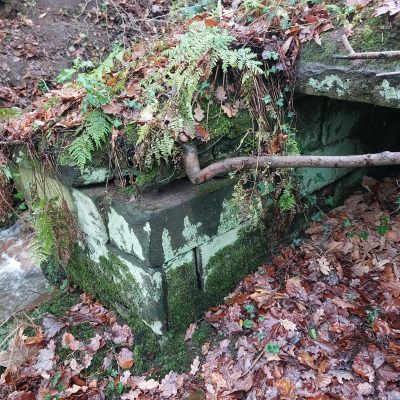
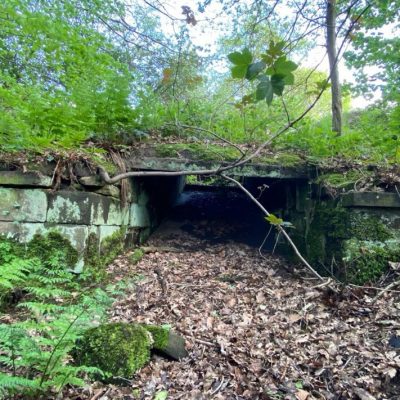
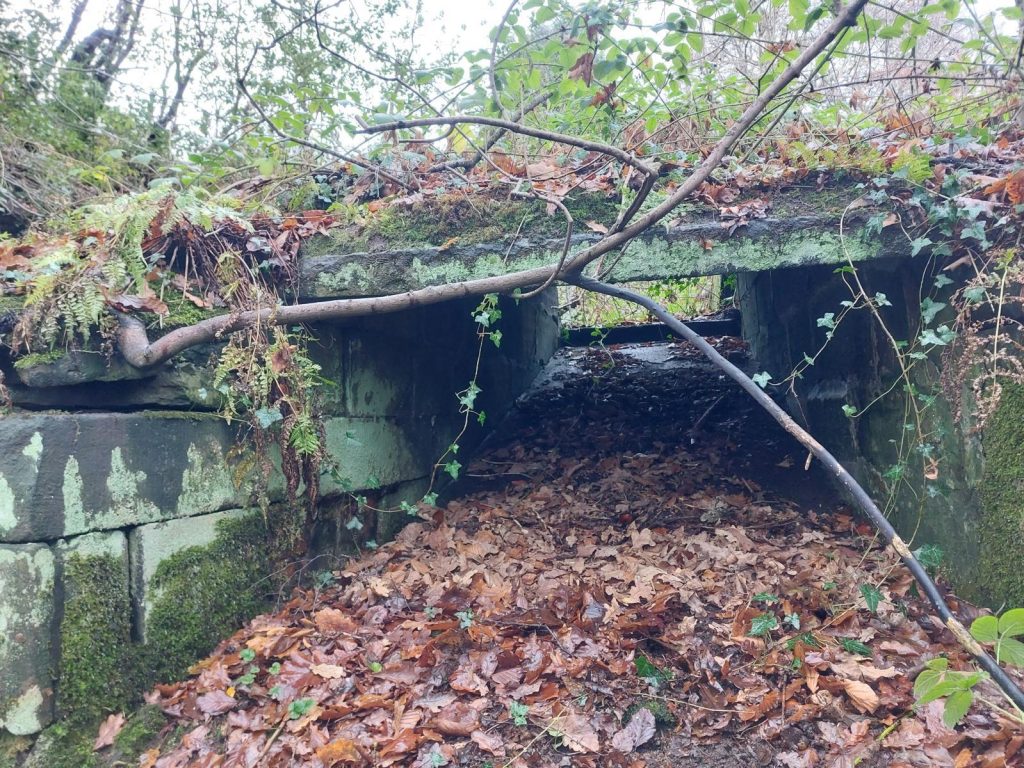
At the eastern end of the dam are the remains of a stone-built weir or sluice, including a covered overflow channel constructed from fine sandstone blocks. Although much of this channel has collapsed over time due to water erosion, enough survives to show it once controlled water flow with considerable precision. The brick foundations beneath the stonework are particularly significant, suggesting a construction date between 1803 and 1850, most likely at the earlier end of that range.
Together, these features demonstrate that Hunter’s Pool was designed as a managed water body, not a natural pond.
Industrial Origins or Estate Fishpond?
One possible explanation for the creation of Hunter’s Pool lies in the area’s industrial past. Local historian Charles Roeder recorded that a copper smelting house was built nearby in 1807, close to a location known as “Keighly Ditch”. It has been suggested that Hunter’s Pool may have supplied water power for a waterwheel serving this smelting operation.
Supporting this idea are:
- A nearby plot historically named “Cinder Croft”, hinting at metallurgical activity
- A flat, sub-rectangular earthwork on the western side of the dam, possibly the site of a former structure
- An old sunken trackway, or “holloway”, which would have provided access from the surrounding landscape
However, there is no definitive physical or documentary evidence for a mill building, tail race or waterwheel. As such, while an industrial function is possible, it remains unproven.
An equally plausible explanation is that Hunter’s Pool was created by the Mottram estate, which owned the land at the time, for non-industrial purposes. Historic tithe maps show the pool lay on Turnay Hills Common, owned by the Reverend Henry Wright and used by local commoners. This raises the strong possibility that the pond was intended as a managed estate fishpond, perhaps later adapted or reused over time.
Changes Over Time
Nineteenth – and early twentieth-century maps show that Hunter’s Pool was once larger than it is today. Over time, silting reduced its size, particularly at the southern end, which later became wooded. Partial clearance work carried out in the late twentieth century reshaped the pool into its present form as two managed fishing waters, preserving its use while adapting it to modern needs.
A Site of Ongoing Heritage Value
Today, Hunter’s Pool stands as a rare and well-preserved example of an early nineteenth-century dammed pond. Whether created for industry, estate management or fishing, it reflects a period when water power and land use were carefully planned and closely tied to the local landscape.
Windmill Angling Club is proud to steward not only a valued fishing venue, but also an important piece of Cheshire’s historic environment, ensuring that Hunter’s Pool continues to be enjoyed while its story is understood and respected.